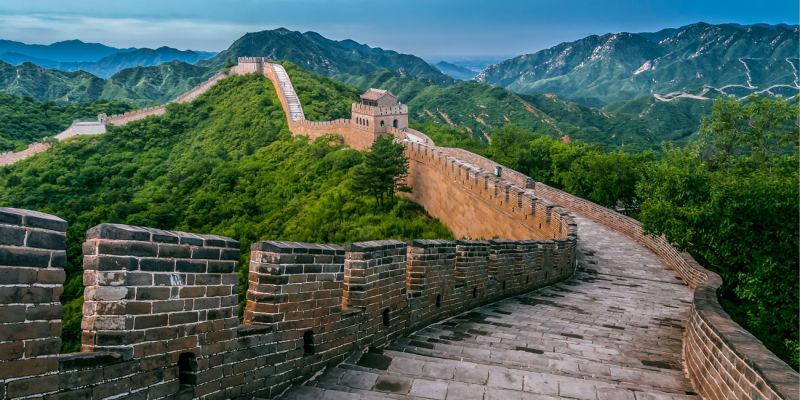
The Great Wall of China, known in every corner of the universe, is one of the seven wonders of the world. Its construction dates back to over 2,000 years ago, around 700 BC, and was built at the behest of Qin Shi Huangdi, the first emperor of the Qin dynasty.
Apparently, at a time when China was divided into many small states, defensive walls used to protect their borders already existed in many of these kingdoms. Emperor Qin Shi Huangdi had the great merit of unifying all the kingdoms (and consequently the walls) by fortifying the already existing protections.
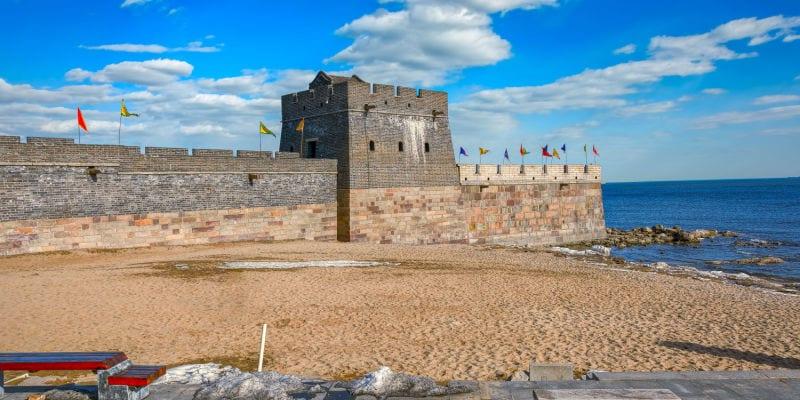
During the Han dynasty (206 to 220 BC), the Qin Wall was restored and extended. During this period, among other things, China had developed a flourishing trade and the Wall traced the route of the Silk Road. However, it was during the Ming dynasty, a full 13 centuries later, that the Great Wall was extended and enriched with towers and cannons, until it was almost 6,400 kilometres long.
 "/>
"/>
Great Wall of China, where is it located and how was it built?
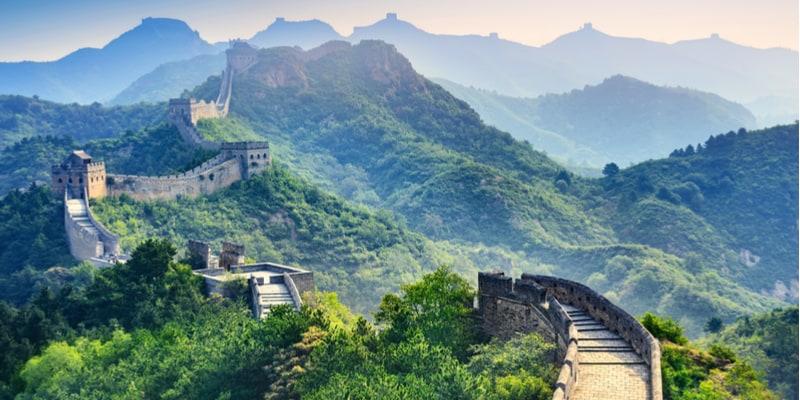
The Great Wall stands today in the mountains in the north of China and surrounds the entire territory northwest of Beijing. It is built of masonry, rocks and rammed earth. Its width varies depending on the section and ranges from 4.5 metres to 9 metres; its height, on the other hand, reaches about 7 or 8 metres in different areas.
It represents one of the largest works ever built and, precisely because of its size and uniqueness, the Wall has always been the subject of legends and curiosities.
 "/>
"/>
10 interesting facts about the Great Wall of China
1. There has never been an actual master plan for the construction of the Great Wall, but the work was built as it progressed over the centuries.
2. From the very beginning, in the time of the Qin dynasty, glutinous rice flour was used to glue the bricks forming the wall together.
3. Due to its narrow width, the Wall is not visible to the naked eye from space, as witnessed by many astronauts who reportedly reported this to NATO headquarters.
Apparently, it is impossible to identify it even at a height of a hundred kilometres unless one uses a telescope.
4. Every year, the Great Wall is visited by more than 10 million tourists. It is one of the most visited works in the world and offers unique and astonishing views.
5. The workers who worked on the construction - several million people - were mostly slaves, soldiers, peasants, prisoners and rebels.
6. The first banknote containing the image of the Great Wall dates back to 1914. It was worth 2 jiao (20 Yuan cents) at the time and is now priceless to collectors.
7. In Hebei Province, there is a section of the Great Wall of China submerged by water and it is called 'Xifengkou'.
8. In China it is called Wan-Li Qang-Qeng which literally means 'wall 10,000 Li long' (which is equivalent to almost 5,000 kilometres).
9. Today, the total length of the Wall is 8,851 kilometres. It is thought, however, that over the centuries many sections have been destroyed and its total length over the centuries has reached 21,196 kilometres (more than half the circumference of the equator which is 40,075 kilometres).
10. The Great Wall of China is called the Longest Cemetery on Earth because more than a million people died during its construction. This is supported by the discovery of many human remains buried at the edges of the wall and found by archaeologists during various excavations in different historical periods.
 "/>
"/>
Map and map
Author: Paola Toia
China